
For Canadians, advertising is part of nearly every online experience, from checking their inbox or scrolling through social media to searching, browsing and opening an app. With so many messages competing for attention, it’s no surprise that fatigue is setting in.
Our research, conducted in partnership with Angus Reid, shows just how widespread the frustration has become. 61% of Canadians say they feel annoyed by online advertising, four in 10 feel overwhelmed and just 7% say they feel genuinely engaged.
If you’re a marketer, that should raise an important question: If your audience is already tuning out, is another impression really the answer?
A better place to start is with the person you’re trying to reach: where they are, what they’re doing and how your message fits into that moment. Here are a few ways to rethink frequency, make better use of context and connect your media mix to create more meaningful opportunities for attention.

Think beyond who you're reaching
Digital advertising has earned its place in the media plan. It gives marketers scale, precision and clear performance signals, but efficiency on a dashboard does not always translate to attention from the person on the other side of the screen.
That is why reaching the right audience is only part of the equation. Where someone encounters your message can shape how they receive it.
The research revealed that 50% of Canadians trust out-of-home (OOH) advertising, compared with just 12% who say the same about online and social advertising. That difference points to the value of thinking beyond personal devices and considering the places and moments that make up their day.
Digital out-of-home (DOOH) advertising plays a key role in connecting these everyday moments. Leveraging advanced programmatic capabilities, DOOH combines the broad reach and impact of traditional, static billboards with the precision, flexibility and efficiency of digital advertising. By bringing together data, contextual triggers and striking visuals, DOOH transforms real-world spaces into powerful storytelling platforms that capture attention and inspire action.
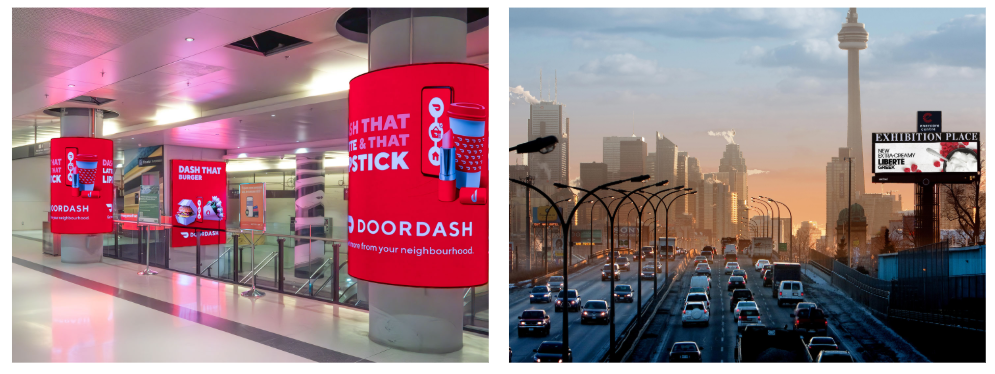
Consider your entire media mix
That path from attention to action is rarely linear. Someone might notice a brand on their commute, look it up later, encounter it again in social media and ultimately take action days later. That makes it important to think about the cumulative impact of the media plan, rather than any one exposure in isolation.
Which ad deserves the credit? Probably none on its own. Consumer decisions happen across moments, and the strongest media plans connect them.
Four ways to plan for attention
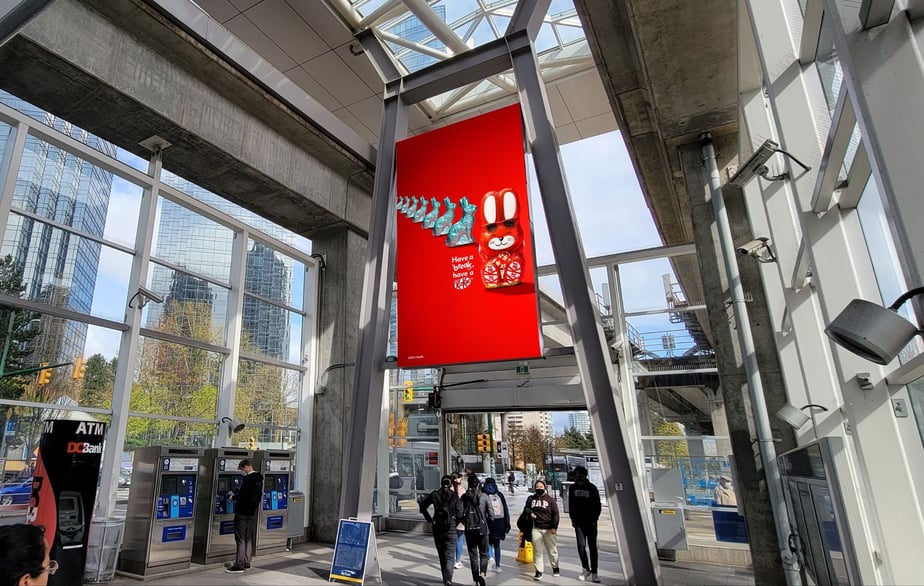
DOOH can complement that broader media mix by capturing attention in environments that other digital channels cannot reach. To get the most from it, you’ll want to think beyond simply adding more impressions and consider how its strengths can contribute enhance your entire media plan:
1. Expand your touchpoints
When frequency starts climbing, ask whether increased exposure across your typical channel mix is really adding value. Bringing DOOH into your media plan can introduce new touchpoints, reaching people away from the personal screens where ad fatigue is often highest. For example, you might reach someone on a transit platform during their commute, at an airport while traveling or in a retail environment closer to the point of purchase.
2. Extend your audience strategy
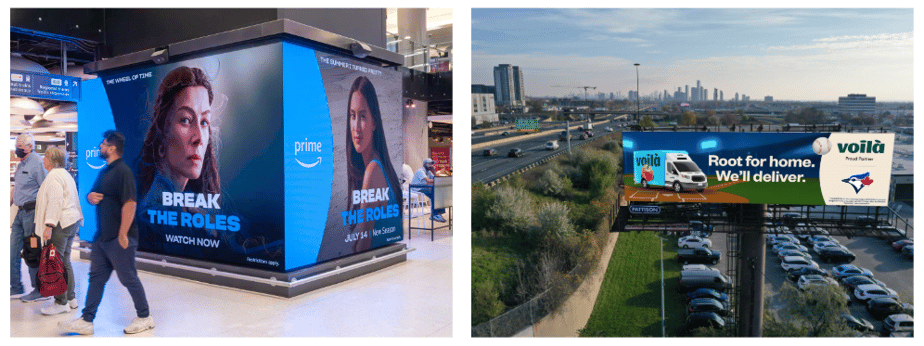
DOOH lets you extend your data-driven audience targeting strategy beyond online channels. Using insights such as behaviours, affinities and purchase intent, marketers can identify locations and screens more likely to reach their target audiences. This creates a more connected omnichannel strategy, reaching the audiences that matter across more touchpoints throughout their day.

3. Use content to make the message more relevant
The right message can have a greater impact when it aligns with what's happening around your audience. Whether it's promoting a luxury hotel in an airport or highlighting a refreshing drink on a hot day, context can make advertising more meaningful. DOOH allows marketers to use contextual signals such as location, time of day, weather and live events to align your message to the moment.
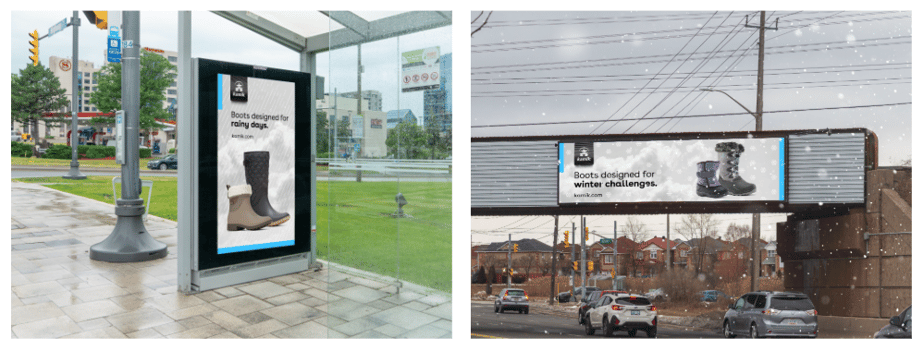
4. Connect exposure to outcomes
DOOH can do more than build awareness. In fact, 39% of Canadians say they have taken action after seeing an out-of-home ad, including 22% who searched for the brand or product online.
And today, you have more ways to measure that impact across the funnel. Programmatic DOOH can be evaluated against outcomes like brand health, purchase intent and foot traffic, helping you understand how the channel is contributing against your campaign goals.

Plan with intention
Consumers are already telling us that online advertising can feel overwhelming. For marketers, the takeaway is not to stop showing up, but to think more carefully about where and how you do.
That means looking beyond frequency alone and building a media plan that gives people different ways to encounter your brand, across channels, environments and moments that serve a clear purpose.